


Understanding Sand Casting: Molding Materials, Casting Process and Quality Control
Sand casting is one of the most widely used metal casting processes for producing customized industrial components. Due to its flexibility, cost efficiency and ability to manufacture complex geometries, sand casting is commonly applied in industries such as machinery manufacturing, mining equipment, agricultural machinery, automotive components and industrial equipment.
For customized castings, the quality of molding materials, mold preparation, pouring control and post-casting inspection all have a direct influence on the final product performance.
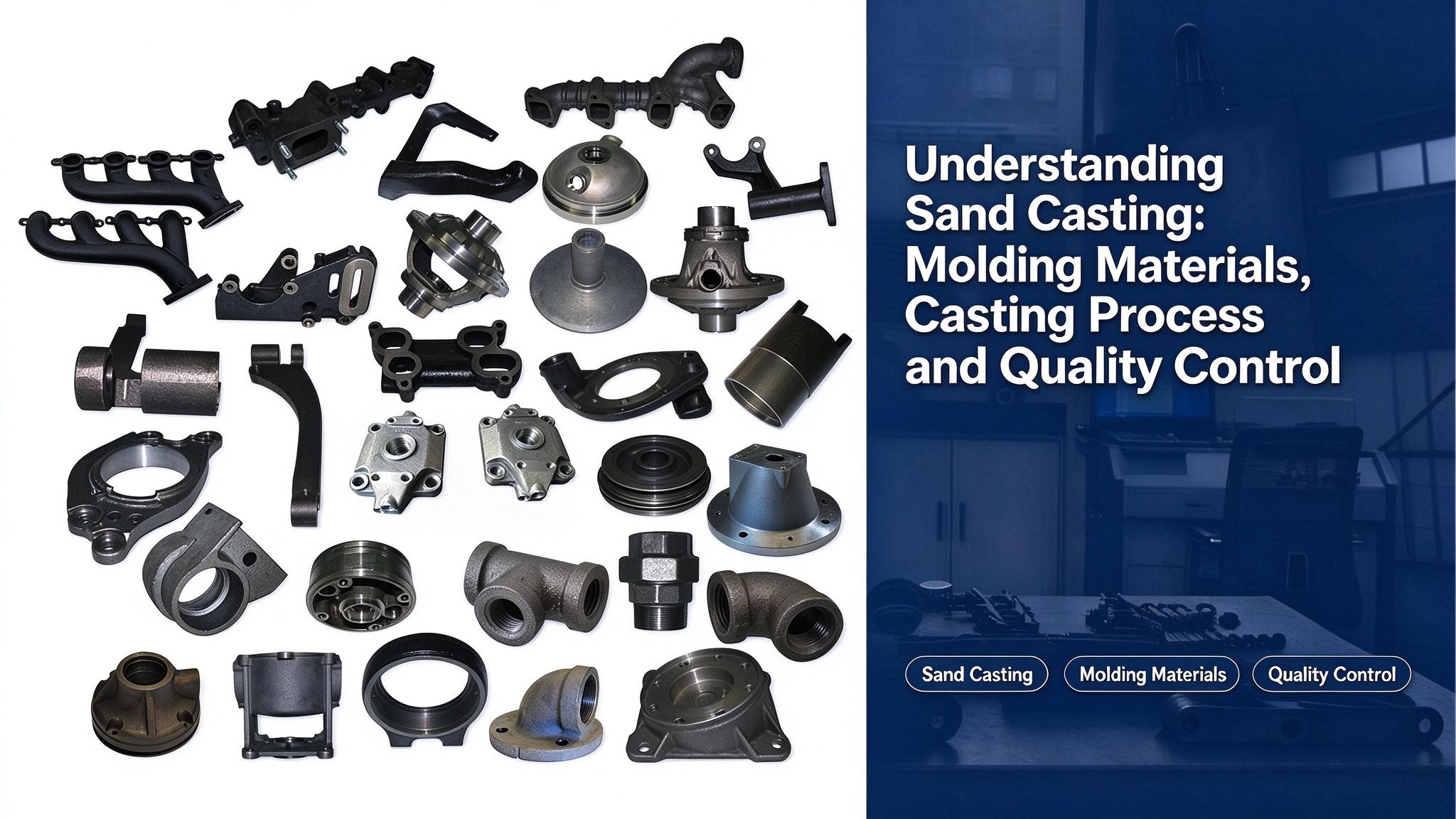
1. Molding Materials Used in Sand Casting
The molding materials used in sand casting mainly include molding sand and core sand. These materials are responsible for forming the cavity where molten metal is poured and solidified into the required component shape.
A typical molding sand system consists of several key elements:
- Sand: The main component is silica sand (SiO₂). High-quality casting sand usually requires a high silica content, generally between 85% and 97%. The sand particles should have suitable shape and uniform size to provide good molding performance. For casting high-temperature alloys, special sands such as zircon sand, magnesia sand and chrome sand may be selected due to their higher heat resistance.
- Binder: The binder is used to bond sand particles together and provide sufficient mold strength. Common binders include clay materials such as ordinary clay and bentonite.
- Water: Water helps combine sand and clay to form molding sand with suitable strength and permeability.
- Additives: Additional materials may be added according to casting requirements. For example, coal powder and heavy oil can help reduce sand adhesion, while wood chips can improve collapsibility and gas permeability.
- Coating Materials: Coatings are applied to mold and core surfaces to reduce sand sticking and improve casting surface quality. Graphite powder coatings are commonly used for cast iron components, while quartz powder coatings may be used for steel castings.
2. Important Properties of Molding Sand
The performance of molding sand directly affects casting quality. Poor-quality molding materials may cause defects such as gas porosity, sand inclusion and sand sticking. High-quality molding sand should have the following characteristics:
Permeability
Permeability refers to the ability of molding sand to allow gases to escape during pouring. When molten metal enters the mold cavity, a large amount of gas is generated. If these gases cannot be discharged effectively, casting defects such as pores and incomplete filling may occur. Permeability is influenced by sand particle size, clay content, moisture content and mold compaction level.
Strength
Molding sand must have sufficient strength to maintain mold integrity during molding, transportation and pouring. However, excessive strength may reduce permeability and collapsibility, which can also negatively affect casting quality.
Refractoriness
Refractoriness is the ability of molding sand to withstand high temperatures without melting or reacting with molten metal. Higher silica content and larger sand particles generally improve heat resistance and reduce the risk of sand adhesion.
Plasticity
Plasticity allows molding sand to deform under external force while maintaining its shape after molding. Good plasticity helps create accurate mold cavities with clear details.
Collapsibility
Collapsibility refers to the ability of molding sand to compress during metal solidification. Good collapsibility helps reduce internal stress and prevents cracking after the casting cools. Adding materials such as wood chips can improve this property.
3. Structure of a Sand Mold
A complete sand mold usually consists of:
- Upper mold
- Lower mold
- Core
- Mold cavity
- Gating system
The contact surface between the upper and lower molds is called the parting line. The mold cavity is the space formed by molding materials where molten metal enters and solidifies into the final casting shape. During pouring, molten metal flows through the gating system into the cavity, while generated gases are released through ventilation channels.
4. Gating System and Pouring Control
The gating system is a series of channels designed to guide molten metal into the mold cavity.
Its main functions include:
- Ensuring smooth and stable metal flow
- Preventing slag and sand particles from entering the cavity
- Controlling temperature distribution
- Compensating for shrinkage during cooling and solidification
A typical gating system includes:
- Pouring cup
- Sprue
- Runner
- Gate
- Riser
Proper gating design helps improve casting quality and reduce defects.
5. Mold and Core Box Manufacturing
The materials used for molds and core boxes usually include wood, metal, and plastic, which can be chosen based on the specific project requirements (such as batch volume, product structure, and manufacturing process, etc.).
For single-piece or small-batch production, wooden patterns and core boxes are commonly used because they are economical and flexible.
For mass production, metal or plastic patterns are preferred due to their longer service life. Metal tooling can typically withstand tens of thousands of production cycles, while wooden patterns have a much shorter service life.
6. Sand Casting Production Process
The basic sand casting process includes:
Pattern Preparation → Sand Filling → Parting Sand Application → Vent Hole Making → Pouring Gate Preparation → Mold Closing → Pattern Removal →Sand Mold Patching→Alloy Melting→ Pouring→ Shakeout,Cleaning and Inspection→ Storage
After casting, components usually undergo cleaning, surface inspection and dimensional inspection to ensure they meet customer requirements.
Conclusion
Sand casting remains an important manufacturing method for customized metal components due to its flexibility and suitability for complex structures.
For industrial casting projects, factors such as molding sand quality, mold design, pouring parameters and inspection procedures all play important roles in achieving stable casting performance.

 Send E-Mail If You Need Any Help